What Happens When You Wear an Outdated Eyeglass Prescription?
Learn how wearing outdated prescription glasses can affect your vision, cause headaches and eye strain, and make reading, screen use, and night driving more difficult. Discover the signs that indicate it may be time to update your eyeglass prescription.
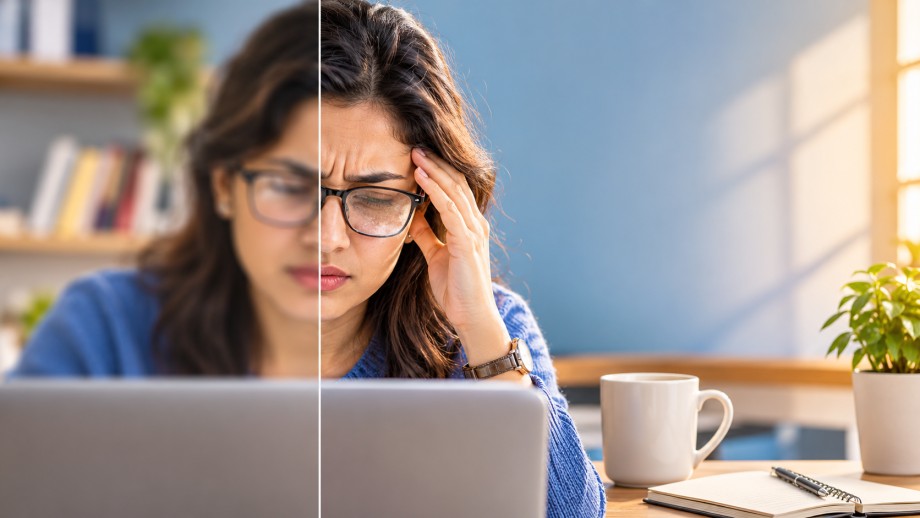
Your glasses may still look perfectly fine, and you might be able to read, drive, or work on a computer without noticing a major difference. But that does not necessarily mean your prescription is still right for your eyes.
An eyeglass prescription reflects how your vision needs to be corrected at a particular point in time. As your eyes change, the lenses that once gave you clear vision may no longer provide the same level of comfort or sharpness.
Wearing an outdated prescription does not usually cause permanent damage to your eyes, but it can make everyday activities more difficult than they need to be. The impact may not be immediately noticeable. Sometimes, they show up as a headache after work, difficulty focusing on road signs, or eyes that feel tired before the day is over.
Here is what can happen when you continue wearing glasses with an outdated prescription.
1. Your Eyes May Work Harder to Focus
When your prescription no longer matches your vision, you may find yourself making small adjustments throughout the day to see clearly.
You might squint at distant objects, move your phone closer or farther away, or tilt your head slightly while reading. These routines can become so ingrained that you may no longer realize you're doing them.
The problem is that your glasses are no longer providing the correction your eyes need. Depending on the type of prescription change, objects may appear blurred, distorted, or difficult to focus on.
If you regularly adjust your posture or viewing distance just to see clearly, it may be time to have your prescription checked.
2. Headaches May Become More Frequent
A headache that develops after reading, working on a laptop, or driving deserves attention, especially if it happens repeatedly.
An old or outdated prescription may cause visual discomfort. Your eyes may struggle to maintain clear focus, particularly during activities that require sustained attention.
You may notice:
Pressure around your forehead or temples.
Discomfort after reading for extended periods.
Headaches toward the end of a workday.
Difficulty concentrating on detailed tasks.
However, headaches have many possible causes. Dehydration, poor sleep, stress, and other vision-related conditions can also contribute. An eye examination can help determine whether your prescription is part of the problem.
3. Reading and Screen Work Can Become Uncomfortable
A prescription that worked well a year or two ago may not provide the same comfort today.
This can be particularly noticeable when switching between a book, computer screen, and mobile phone. You may need more time to bring text into focus or find yourself increasing the screen brightness or text size.
For people who spend several hours working on digital devices, even a small change in vision correction can make close-up tasks feel less comfortable.
You might experience:
Blurred letters when reading.
Difficulty shifting focus between near and distant objects.
Frequent breaks because your eyes feel tired.
An unusual habit of holding reading materials either too close or too far away.
These symptoms do not automatically mean your prescription is outdated. Dry eyes and prolonged screen use can produce similar discomfort.
4. Night Driving May Become More Difficult
Driving at night requires clear vision, particularly when identifying road signs, judging distances, and responding to other vehicles.
An outdated prescription may make these tasks harder. You could notice that street signs appear less sharp, distant headlights look uncomfortable, or objects take longer to come into focus.
Some people also experience increased visual discomfort from glare around headlights and streetlights.
If you are struggling to see clearly while driving, do not assume that changing your driving habits is enough. Have your vision assessed before continuing to drive in conditions where you cannot see safely.
5. You May Experience Eye Strain and Fatigue
Eye strain is not always a sharp or painful sensation. Sometimes, it feels like your eyes have simply run out of energy.
After spending time reading, using a computer, or focusing on detailed work, your eyes may feel heavy, irritated, or uncomfortable.
An incorrect prescription can contribute to this problem because the lenses may not be providing the appropriate correction.
You may notice that:
Your eyes feel tired earlier than usual.
You frequently rub your eyes.
Maintaining focus becomes difficult.
You feel uncomfortable after switching between different viewing distances.
Taking breaks may help with general screen-related fatigue, but persistent discomfort should not be ignored.
6. Your Prescription May No Longer Match Your Changing Vision
Vision changes do not always happen suddenly. They can develop gradually, which is why some people continue using the same glasses long after their prescription has changed.
Several factors can affect your prescription, including:
Age-related changes: Near vision often becomes more difficult as the eyes lose some of their ability to focus on close objects.
Changes in refractive error: Nearsightedness, farsightedness, and astigmatism can change over time.
Certain health conditions: Conditions such as diabetes can affect vision and may cause changes in eyesight.
Eye conditions: Cataracts and other eye problems can affect visual clarity independently of your glasses prescription.
This is one reason an eye examination matters. A prescription update is not simply about choosing stronger lenses; it also provides an opportunity to assess changes in your eye health.
7. Your Everyday Activities May Become Less Convenient
One of the less obvious effects of an outdated prescription is how it changes your daily habits.
You may not immediately connect poor vision with small inconveniences, such as struggling to recognize someone across a room, taking longer to read product labels, or repeatedly adjusting your glasses while working.
Over time, these little adjustments can become part of your routine.
The right prescription should support the activities you actually do, whether that means reading, driving, using digital devices, or working with detailed objects.
Does Wearing an Outdated Eyeglass Prescription Damage Your Eyes?
This is a common concern, particularly among people who have used the same glasses for several years.
For most adults, wearing glasses with an outdated prescription does not permanently damage the eyes or make eyesight weaker. However, an incorrect prescription can cause temporary discomfort, blurred vision, headaches, and eye strain.
The more important concern is whether your vision is clear enough for your daily activities. Poor vision while driving, working, or performing tasks that require accurate visual judgment should not be overlooked.
The American Academy of Ophthalmology also explains that incorrect glasses can cause discomfort without physically damaging the eyes.
When Should You Get Your Eyeglass Prescription Updated?
There is no single expiration date that applies to every eyeglass prescription. How often you need an eye examination depends on your age, vision changes, eye health, and your eye care professional's recommendation.
Consider scheduling an examination if:
Your current glasses no longer provide clear vision.
You experience recurring headaches while wearing them.
Reading or computer work has become uncomfortable.
You frequently squint to recognize distant objects.
Night driving has become more difficult.
Your glasses feel less comfortable than they used to.
Do not wait for all these symptoms to appear. Regular eye examinations can identify prescription changes and other eye health concerns before they become more noticeable.
If you experience sudden vision loss, a sudden increase in floaters or flashes, or a sudden curtain-like shadow across your vision, seek urgent eye care rather than waiting for a routine prescription check.
What Should You Do If Your Prescription Is Outdated?
If you suspect your glasses are no longer providing the correction you need, start with a comprehensive eye examination.
After receiving an updated prescription, consider the following:
1. Check your lens requirements.
Make sure your new lenses match your current prescription. If you use separate glasses for reading, distance, or computer work, discuss whether you still need those different corrections.
2. Choose lenses based on your daily activities.
Someone who spends most of the day working on a computer may have different visual requirements from someone who frequently drives or reads printed material.
3. Check the frame fit
Even correctly prescribed lenses can feel uncomfortable if the frames sit too low, press against your nose, or are not properly adjusted.
4. Replace damaged or worn lenses.
Scratches, coating damage, and other lens problems can affect your viewing comfort. A new prescription will not solve every problem caused by damaged lenses.
5. Give yourself time to adjust.
A new prescription can feel unfamiliar at first, especially if the lens power or design has changed. If discomfort persists, contact your eye care professional to check the prescription, lens measurements, and frame fit.
Frequently Asked Questions
1. How long can I safely wear the same eyeglass prescription?
There is no fixed duration for everyone. Some prescriptions remain suitable for several years, while others change sooner. Follow the examination schedule your eye care professional recommends.
2. Can outdated glasses cause dizziness?
Yes. An incorrect prescription can contribute to visual discomfort and, in some people, dizziness or difficulty adjusting to visual changes. Persistent dizziness should be evaluated rather than automatically attributed to your glasses.
3. Will my eyesight get worse if I continue wearing old glasses?
For most adults, wearing outdated prescription glasses does not make the eyes physically weaker or cause permanent vision damage. However, your underlying vision can change naturally, leaving your old lenses unsuitable.
4. Can I use my old glasses if I only need them occasionally?
You may find an old pair useful in some situations, but it should not replace an appropriate current prescription when you need clear vision. If the glasses cause blurring or discomfort, have your eyes checked.
5. Do I need new glasses every year?
Not necessarily. You need new glasses when your prescription changes, your lenses become unsuitable or damaged, or your visual requirements change. Regular examinations help determine when an update is necessary
Clear Vision Starts With the Right Prescription
An old pair of glasses may still look good, fit comfortably, and seem perfectly usable. But the condition of the frames does not tell you whether the prescription is still appropriate.
If reading takes more effort, distant objects appear less sharp, or your eyes feel tired after everyday activities, pay attention to those changes.
Rather than adjusting your habits to compensate for unclear vision, arrange an eye examination and find out whether your prescription needs updating. The goal is not simply to own a new pair of glasses. It is to have lenses that support your current vision and make everyday tasks more comfortable.


.webp)
.webp)